Image supplied
Presented in person and online, details below.
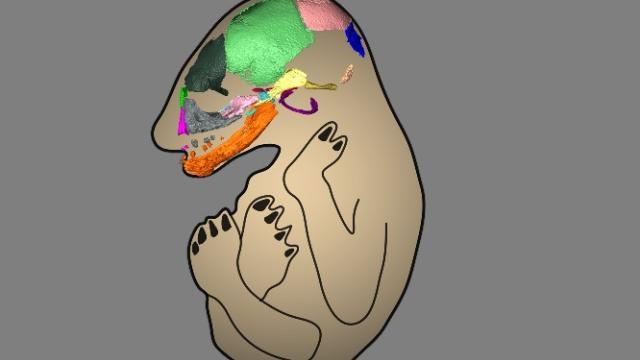
Bats are known for their ability of laryngeal echolocation producing of high-frequency pulses from their larynx and interpreting returning echoes to track their prey and avoid obstacles in the night sky. The evolution of laryngeal echolocation within bats remains unclear. Two hypotheses emerged: (1) laryngeal echolocation evolved in the common ancestor of all bats and was then lost in pteropodids, and (2) laryngeal echolocation convergently evolved in both rhinolophoids and yangochiropterans. In his PhD thesis, Yannick is integrating evolutionary and developmental approaches to provide additional evidence to clarify this question. Craniofacial development was investigated across the three major groups of bats and compared with non-bat mammals. Series of foetal samples were 3D scanned and individual cranial elements were 3D segmented using the software Amira. After focusing his research on growth rate of the upper jaw complex, Yannick studied the ontogenetic trajectory of the whole cranium extracting volumetric data from the 3D surface models. Growth rate slopes were used as raw data in principal component analysis. Ancestral state of cranial growth rate was reconstructed to trace heterochronic shifts within bat phylogeny. Yangochiropterans exhibit a faster cranial growth rate, especially on the craniofacial region, than both pteropodids and rhinolophoids. These results illustrate different cranial developmental strategies between both laryngeally echolocating yangochiropterans and rhinolophoids supporting the convergent evolution scenario. Landmarks were also applied on foetal crania to compare ontogenetic allometry within bats and highlight which cranial regions differentiate between bat major groups during the prenatal period. This project will reinforce our knowledge concerning the origins of laryngeal echolocation in bats and cranial development in mammals.
About the Speaker
Yannick Pommery is a PhD student in evolutionary biology at ANU working on the evolution of the craniofacial growth and development in bats.
Zoom details:
https://anu.zoom.us/meeting/register/s_EZESgtQQ-KVFXmoCjPDQ
In-person: Room 3/03/3.04, Sir Roland Wilson building, 120 McCoy Circuit, ANU
Presented as part of the School of Archaeology and Anthropology's 2025 Biological Anthropology Research (BAR) Seminar series.
Location
Speakers
- Yannick Pommery, ANU
Event Series
Contact
- Katharine Balolia