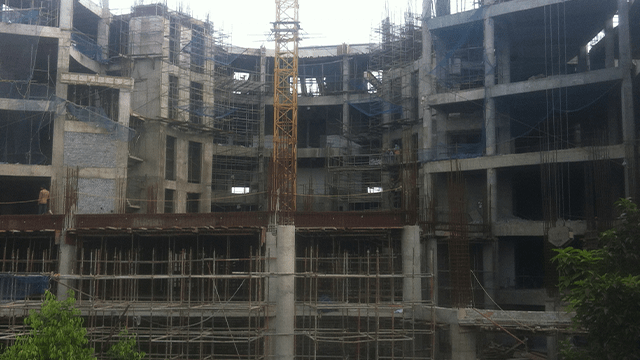
This paper explores how workers negotiate a stigmatized social category known as “labour”. On the surface this category appears to be a socio-economic one, referring to one’s position in a division of labour, namely a worker who engages in a range of manual, “unskilled” tasks. Such an account aligns with arguments around the eclipsing of caste by class in contemporary India. In contrast, I argue that the figure of “labour” marks the inflection of class by caste. Following Ambedkar’s formulation, I demonstrate how “labour” constitutes not a position in a ‘division of labour’ but rather a type of self in a hierarchical “division of labourers.” Moreover, this figure is mobilized, projected, recognized and resisted through everyday workplace interactions, such as giving and receiving of commands and reprimands. The use of abuse terms (gālī) are central here as they indicate a kind of disrespect indicative of caste hierarchies, but also because their “rough” communicative form was described as being appropriate for the very characters of “labour” people. Here “labour” marks a biologized person-type as well as a particular class.
Speaker:
Adam is a lecturer of anthropology in the School of Archaeology and Anthropology at the Australian National University. His research brings together economic and linguistic anthropology with a regional focus on India. He is currently developing a manuscript on the semiotics of exposure and labour in the Indian construction industry. He is also conducting fieldwork on the emergence of algorithmic credit-scoring systems as a means of extending credit and debt relations to unbanked and under banked populations in India. His work has been featured in Anthropological Quarterly, Social Studies of Science, Anthropology of Work Review, and New Media and Society.
In-person: H.C Coombs Building, H.C Coombs Building, Seminar Room C, Ground floor (near Coombs Lecture theatre)
Zoom link: https://anu.zoom.us/j/82431454032?pwd=owA39nWqTYm2TGOcC0sWa9bEDVangD.1
Location
Speakers
- Adam Sargent (ANU)
Event Series
Contact
- Kirsty Wissing