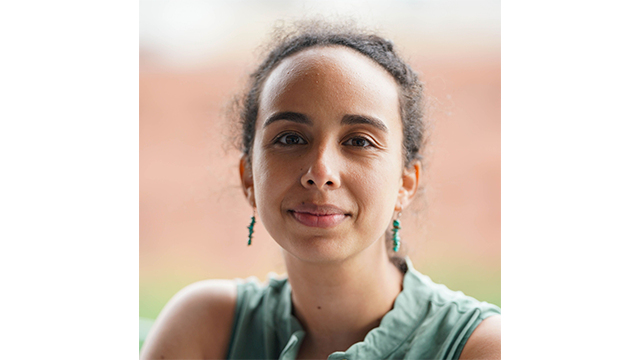
Dr Zewdi Tsegai. Image supplied
At some point in our evolutionary history, we transitioned from being an ape-like arboreal species to becoming a committed terrestrial biped. However, the mode and timing of this change is not well understood, and it is becoming increasingly evident that fossil human ancestors were highly varied in their locomotor behaviour, both in how much time they spent in the trees and how they walked on the ground. Ecophenotypic features of the skeleton that adapt during life are likely to hold a clear behavioural signal, rather than being influenced by phylogenetic relatedness. This includes the internal structure of the skeleton that remodels in response to mechanical loading. Differences in trabecular and cortical bone structure reflect ankle posture and foot use, and can be applied to fossil hominins such as Australopithecus africanus, Homo naledi, and Homo floresiensis. Even with an improved understanding of the morphology of the skeleton, often our interpretations of joint function are limited to analysis of dry bone and lack the full anatomical context, including the opposing side of the articular surface and soft tissues such as muscles, tendons and ligaments. In regions of the skeleton such as the hand and foot, multiple bones move together to create complex movements, making it challenging to understand how each bone contributes to locomotor function. Through in vivo and ex vivo X-ray videos of primates, we can visualise how bones in the foot actually move during different behaviours, and better understand the connection between bone shape and function. Through an integrative approach that develops novel approaches to study the morphology of the skeleton along with an improved understanding of locomotor biomechanics, we can better reconstruct behaviour in the past.
Dr. Zewdi Tsegai is an Assistant Professor in the Department of Organismal Biology and Anatomy at the University of Chicago. Her research is focused on reconstructing locomotor behaviour in extinct human relatives.
Location
Speakers
- Zewdi Tsegai, PhD (University of Chicago)
Event Series
Contact
- Katharine Balolia
Image Gallery